
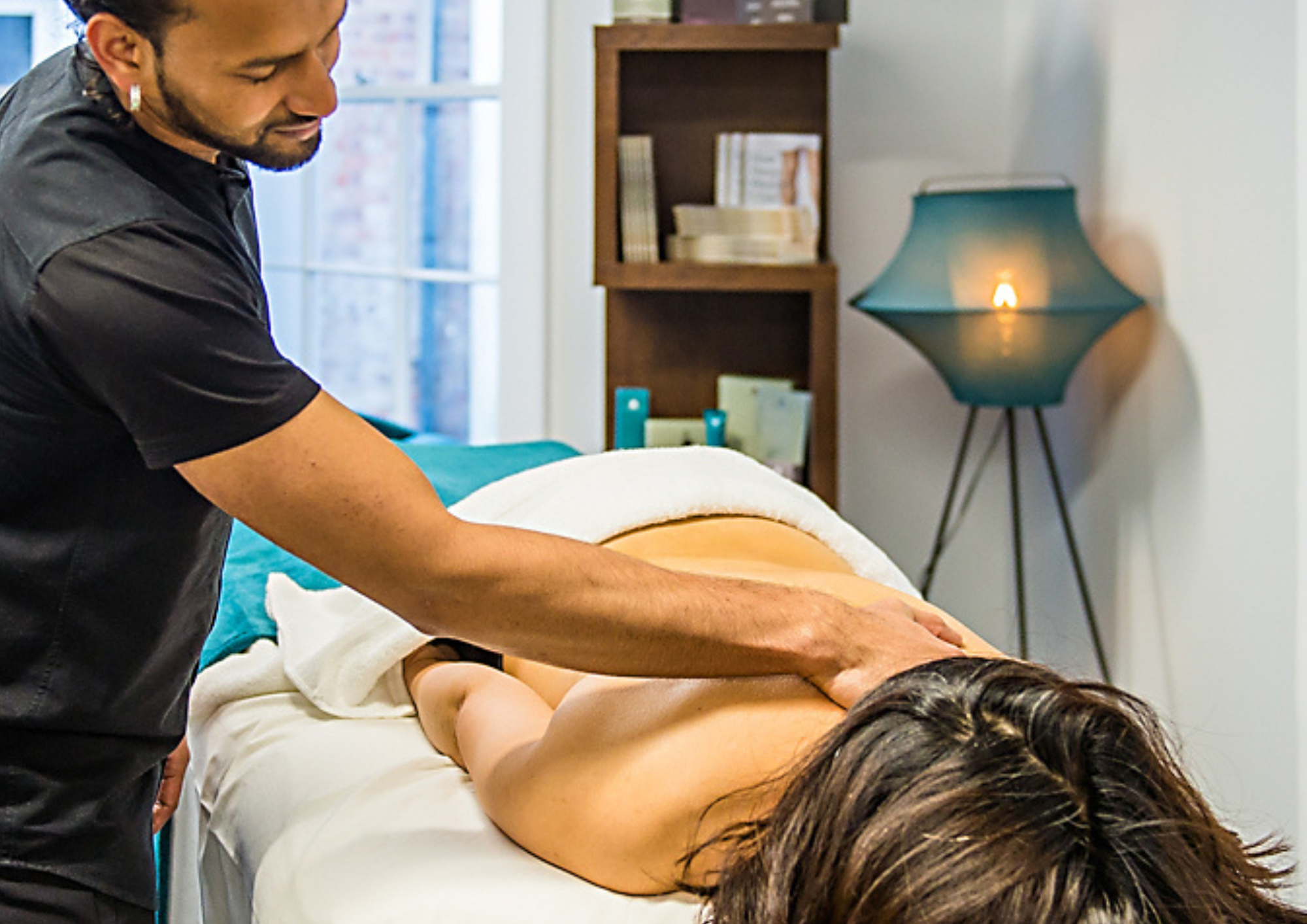
How to conserve energy and deliver a better massage treatment to your clients.
One of the biggest mistakes that I see therapists making in trade tests and treatments, is a lack of good body mechanics. Essentially, therapists that try to force pressure instead of just using their body weight and posture to create depth without strain.
A few of the myths about deeper massage pressure I have heard include;
- It’s not a deep enough massage if it doesn’t hurt
- If I don’t feel tired after giving a massage, I haven’t put enough effort / pressure / depth in
- I need my couch lower so I can put more force / pressure into my massage
- I expect to feel sore after a day of offering massage treatments
- You can only safely offer 3 or 4 massages a day or you are damaging your body
None of the above statements are true, unless you are using force instead of fall and you are not capitalising on body mechanics to create depth in your treatments.
A deep massage treatment should never hurt you or your client, if it does, stop what you are doing immediately and seek medical advice.
If your client experiences pain during a massage treatment, then what you are doing is likely causing damage to their tissues. Discomfort whilst you are treating an injury or chronic condition, is acceptable and almost entirely unavoidable, but pain means damage. The difference between discomfort and pain is that the discomfort stops the moment you stop, whereas pain lingers. Discomfort feels unpleasant but that it will do good in the long run, whereas pain is just pain, it hurts, and it does not feel like it will do any good.
If you experience pain, fatigue or even mild discomfort during a massage treatment, then what you are doing is likely causing you damage. This is not only detrimental to you and your business but also to your clients who you will not be able to treat at all if the damage is severe or persistent. RSI is common in massage therapists because of repetition. It’s quite simple, remove the repetition. Don’t stick to a structured routine and instead, allow yourself and your body to move in a more instinctive manner that is comfortable for you. Allow your pressure to come from your stance and not from tensing your muscles. The weight of a relaxed muscle is significantly heavier than the weight of a tensed muscle, so just by relaxing, you are already increasing depth and pressure.
Lowering your couch does nothing more than hurt your back
Lowering your couch does not increase the pressure that you put into a massage, it can actually do the opposite. The lower you have your couch, the more likely you are to round your shoulders and ‘push’ into your client instead of relaxing your muscles and letting your natural body weight do the work.
The lower your couch is, the more difficult it is to keep your posture, increasing the risk of lower back pain.
The lower you have your couch the more you have to tense through your body to stop yourself from collapsing into your client. The more tense you are, the less pressure you are putting on the client, making you feel like you have to push with your arms, thus raising your shoulders and rounding your upper back causing upper back, shoulder, neck and clavicle issues.
Raising your couch higher means you can relax and lean into your client and your couch. A relaxed muscle is heavier than a tense one!
Feeling sore after a day of massage.
Feeling sore simply means that you have been tense instead of relaxed and you have overworked yourself. This is not good for you, because you feel sore and tense and tired, and you are less likely to have the same energy tomorrow. This is also not good for your clients because you will have less energy tomorrow and you were most likely not giving your best because you would have been feeling more and more drained and tired throughout the day. You should be walking away from a day of massage, feeling on top of the world and ready to do more.
You can only do 3 or 4 massages a day or you risk damaging yourself.
This statement is true, if you are using force and not fall (body mechanics) and you have a strict routine.
If you are sticking to a rigid routine, this will inevitably lead to RSI. The repetition of each movement, whether you use force or fall, is highly likely to lead to repetitive strain. You must be able to change what you are doing, especially if you notice that you are starting to feel the signs of RSI.
If you are using force, that means that you are tensing muscles. Muscles that are tensed for long periods of time, develop issues such as build up of lactic acids, fatigue, RSI etc. You need to avoid this as much as possible. Using body mechanics (fall), means that your muscles are relaxed and instead you are using movement, flow and leaning into your client instead of any force. This keeps your body healthy and strain free and means your client has a more relaxing experience, whilst still getting the pressure and depth that they need.